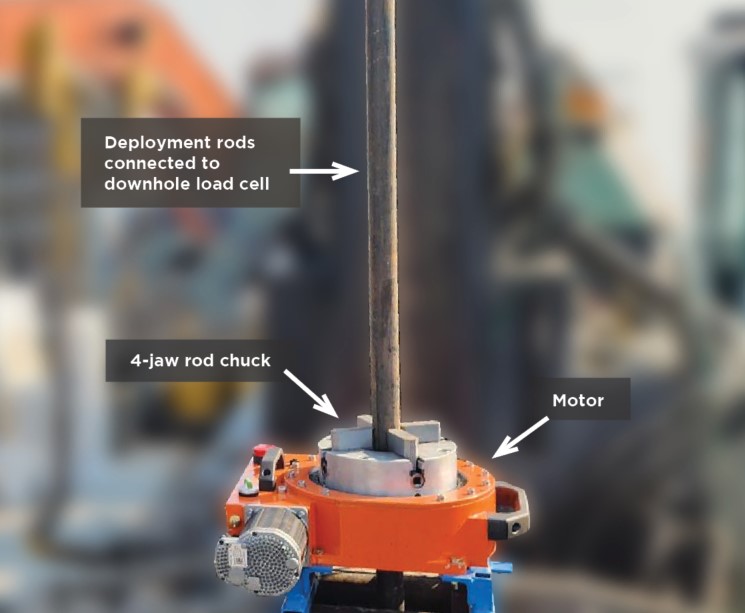
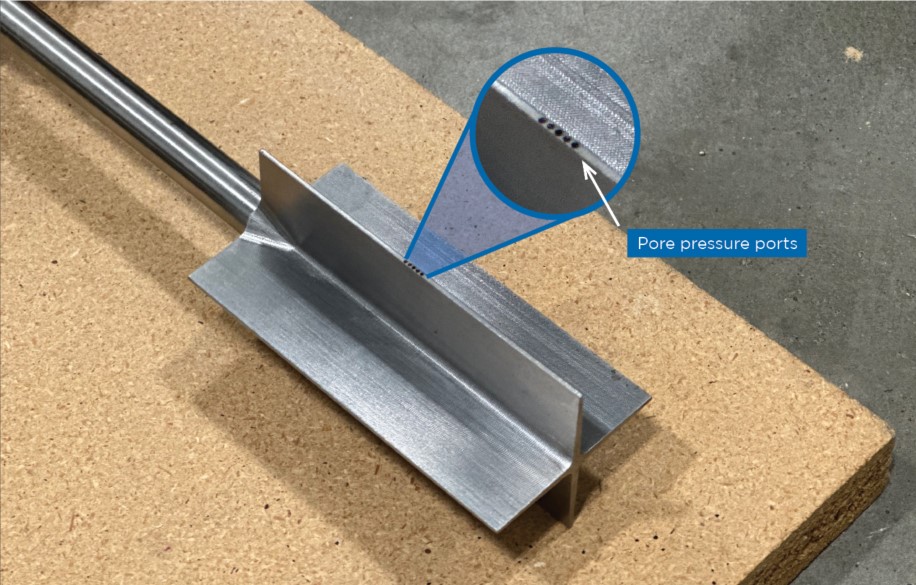
The variable‑rate piezometer vane system (VR‑eVSTu™) is a prototype instrument developed by ConeTec. Designed for use in both tailings and natural soils, the system integrates ConeTec’s digital vane shear testing equipment with a newly engineered load cell and a specially designed vane blade. The innovative load cell includes a pore pressure transducer that measures pore fluid pressure during both standard‑rate and variable‑rate vane shear testing.
Features
Patent‑pending design that complies with ASTM and ISO dimensions, ensuring compatibility with existing standards and comparability with typical vane tests.
Prototype tool capable of rotation speeds from 0.1°/s (ASTM VST) to 30°/s (FVST), up to 100 Nm maximum torque.
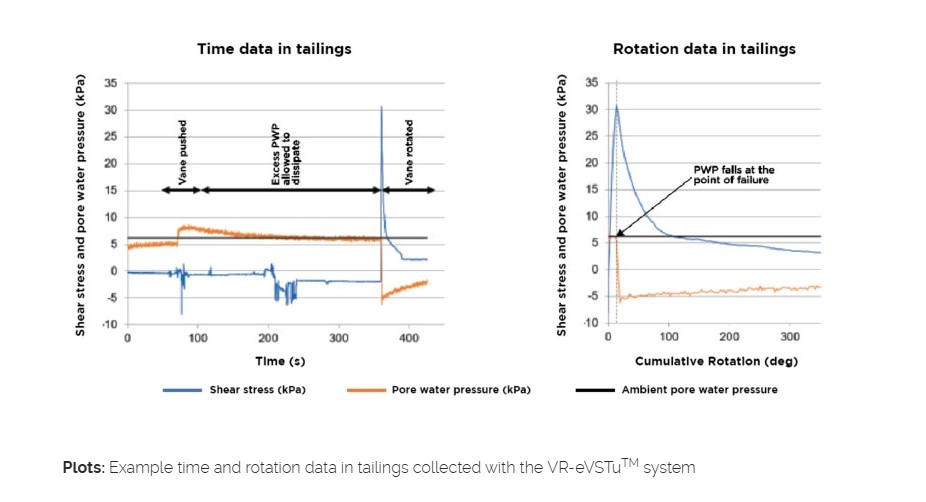
Records pore water pressure (PWP) during vane insertion, rotation, and retrieval — capturing pore pressure responses generated by penetration and shearing.
Downhole instrumentation provides reliable results at low strengths and low pore pressures.
Vane sizes available for testing shear strengths below 1 kPa.
Includes a temperature sensor and inclinometer package.
Capabilities
Measures shear stress and pore pressure simultaneously during vane insertion and rotation.
Supports standard‑rate vane shear testing with pore pressure measurement.
Supports variable‑rate (fast) vane shear testing with pore pressure measurement.
Offers insight into drainage conditions during shearing — including undrained, partially drained, and drained responses.
Designed for a broad range of materials, including natural soils and mine tailings.
Measures peak, post‑peak, and remoulded undrained shear stress, along with full PWP response throughout shearing.
Addresses limitations of traditional VST and FVST tools, especially in coarser materials, where partial drainage may lead to unconservative strength estimates.
Can perform viscosity measurements in slurries and soft sediments using the same equipment.
Supports ongoing research into brittleness, consolidation behaviour, and dilative/contractive responses for improved geotechnical interpretations.









QUICK LINKS